Section 1: Product Identification
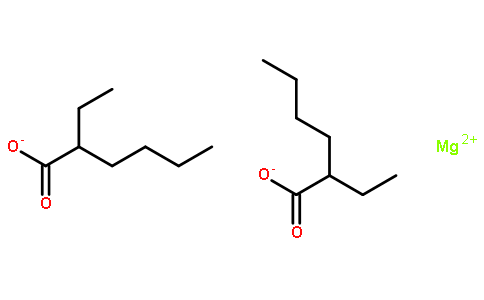
Chemical Name: Magnesium 2-ethylhexanoate, 30-40% solution in toluene
CAS Registry Number: 15602-15-0
Formula: Mg[OOCCH(C2H5)C4H9]2
EINECS Number: none
Chemical Family: metal carboxylate
Synonym: 2-Ethylhexanoic acid, magnesium(+2) salt
Section 2: Composition and Information on Ingredients
Ingredient CAS Number Percent ACGIH (TWA) OSHA (PEL)
Title Compound 15602-15-0 30% no data no data
Toluene 108-88-3 70% 50ppm 200ppm
Section 3: Hazards Identification
Harmful by inhalation and if swallowed. Possible risk of irreversible effects. May impair fertility. Irritating to
Emergency Overview:
skin, eyes and respiratory tract.
Primary Routes of Exposure: Eye, skin, ingestion and inhalation.
Eye Contact: Causes severe irritation to the eyes with redness and pain.
Skin Contact: Causes slight to mild irritation of the skin. May be absorbed through the skin.
Causes irritation of the upper respiratory tract. Symptoms of overexposure may cause confusion, headaches,
Inhalation:
dizziness, fatigue.
Ingestion: Harmful if swallowed. Swallowing may cause abdominal spasms.
Irritating to skin, eyes and respiratory tract. Inhalation or ingestion may lead to fatigue, confusion, headache,
Acute Health Affects:
dizziness and drowsiness. High concentrations may cause unconsciousness and death.
Reports of chronic exposure to toluene include anemia, decreased blood cell count and bone marrow
Chronic Health Affects:
hypoplasia. Liver and kidney damage may occur. May impair fertility. Possible risk of irreversible effects.
NTP: No
IARC: No
OSHA: No
SECTION 4: First Aid Measures
Immediately flush the eyes with copious amounts of water for at least 10-15 minutes. A victim will need
Eye Exposure:
assistance in keeping their eye lids open. Get immediate medical attention.
Wash the affected area immediately with water. Remove contaminated clothing if necessary. Seek medical
Skin Exposure:
assistance if irritation persists.
Remove the victim to fresh air. Closely monitor the victim for signs of respiratory problems, such as difficulty
Inhalation:
in breathing, coughing, wheezing, or pain. In such cases seek immediate medical assistance.
Seek medical attention immediately. Keep the victim calm. Give the victim water (only if conscious). Induce
Ingestion:
vomiting if directed by medical personnel.
SECTION 5: Fire Fighting Measures
Flash Point: 40°F(toluene)
Autoignition Temperature: 422C (toluene)
Explosion Limits: not determined
Extinguishing Medium: dry chemical, carbon dioxide, water spray or foam.
Fire fighters should be equipped with a NIOSH-approved positive pressure self-contained breathing and full
Special Fire Fighting Procedures:
protective clothing.
Hazardous Combustion and carbon dioxide, carbon monoxide, soot, organic vapors, and magnesium oxide
Decomposion Products:
Unusual Fire or Explosion Hazards: Flammable liquid. No unusual fire or explosion hazards.
SECTION 6: Accidental Release Measures
Eliminate all ignition sources. Small spills may be adsorbed into diatomaceous earth, sand, or other suitable
Spill and Leak Procedures:
adsorbent, and swept up.
SECTION 7: Handling and Storage
Handling and Storage: Store in a cool, dry, well-ventilated area away from heat and direct sunlight. Keep containers tightly sealed.
SECTION 8: Exposure Controls and Personal Protection
Always wear safety glasses. If pouring or transferring this substance wear a face shield for additional
Eye Protection:
protection.
Skin Protection: Wear protective clothing and gloves. Consult with glove manufacturer to determine the proper type of glove.
Ventilation: Work with this product in a well-ventilated area, preferably a fume hood.
If ventilation is not available a respirator should be worn. The use of respirators requires a Respirator
Respirator:
Protection Program to be in compliance with 29 CFR 1910.134
Ventilation: Work with this product in a well-ventilated area, preferably a fume hood.
Additional Protection: No additional protection required.
SECTION 9: Physical and Chemical Properties
Color and Form: viscous, amber liquid
Molecular Weight: 310.72
Melting Point: no data
Boiling Point: no data
Vapor Pressure: no data
Specific Gravity: no data
Odor: strong organic odor
Solubility in Water: insoluble
SECTION 10: Stability and Reactivity
Stability: air and moisture-stable liquid
Hazardous Polymerization: no hazardous polymerization
Conditions to Avoid: Contact with an ignition source.
Incompatibility: oxidizing agents
Decomposition Products: carbon dioxide, carbon monoxide, magnesium oxide and organic fumes.
SECTION 11: Toxicological Information
For toluene: Oral (human); LDLo: 50mg/kg. Inhalation (human); TCLo: 200ppm. Oral (rat); LD50: 636mg/kg.
Intraperitoneal (rat); LD50: 1332mg/kg. Intravenous (rat); LD50: 1960mg/kg. Oral (rat); TDLo:
RTECS Data:
42380mg/kg/49D-I. Inhalation (rat); TCLo: 1600ppm/20H/7D-I. Material has effects on liver, reproductive
systems, and blood. See RTECS# XS5250000 for additional information.
Carcinogenic Effects: No reported carcinogenic effects
Mutagenic Effects: Animal studies indicate that toluene may act as a mutagen.
Tetratogenic Effects: No reported tetratogenic effects
SECTION 12: Ecological Information
Ecological Information: In significant quantities toluene may be toxic to aquatic life.
SECTION 13: Disposal Considerations
Dispose of according to local, state and federal regulations. For purposes of shipping waste material see the
Disposal:
section 14 in this document on transportation.
SECTION 14: Transportation
Shipping Name (CFR): Flammable liquids, N.O.S.
Hazard Class (CFR): 3
Additional Hazard Class (CFR): NA
Packaging Group (CFR): III
UN ID Number (CFR): UN# 1993
Shipping Name (IATA): Flammable liquid, N.O.S.
Hazard Class (IATA): 3
Additional Hazard Class (IATA): NA
Packaging Group (IATA): III
UN ID Number (IATA): UN# 1993
SECTION 15: Regulatory Information
TSCA: listed on the TSCA inventory
SARA (Title 313): not regulated by Title 313
Second Ingredient: Toluene: listed on TSCA: regulated by Sara 313
SECTION 16 - ADDITIONAL INFORMATION
N/A


 基本信息
展开↓
基本信息
展开↓  物化性质展开↓
  安全信息展开↓
 MSDS 展开↓